
Inspired by fast fashion—which involves the rapid production of low-quality clothing sold at low prices and directly inspired by the latest trends, with collections rolling out at a breakneck pace (Lucio, 2023)—fast deco is a phenomenon that continues to grow.
Fast-deco is based on the same principles as fast fashion: it is a consumption model that involves mass-producing home furnishings at very affordable prices and in line with current trends (Zero Waste France, the National Network of Resource and Recycling Centers, and Friends of the Earth France, 2024). As with fast fashion, this new trend encourages compulsive buying and overconsumption (RTS, 2025a).
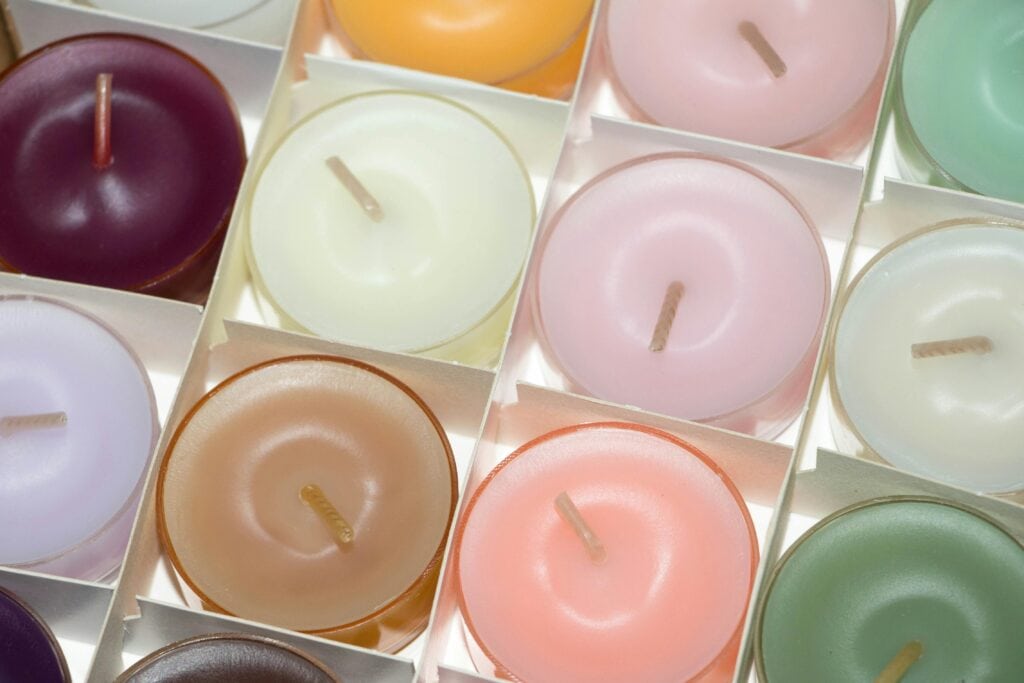
Image from: https://www.pexels.com/fr-fr/photo/bougies-piliers-de-couleurs-assorties-33197/
Driven by major retailers that update their collections at a breakneck pace, this trend is further amplified by social media. Videos and photos showcase home decor products, sparking desire and encouraging users to buy more and more (RTS, 2025a).
In Switzerland, the furniture market was estimated at 5.37 billion Swiss francs in 2023 (Marchand, 2024). In France, this trend was already gaining even more momentum: by 2021, the home decor market had reached nearly 26 billion euros. This trend was particularly amplified by the COVID-19 health crisis, a period during which many people, confined to their homes, invested in furnishing and decorating their interiors (Zero Waste France et al., 2024).
However, despite its scale, “fast-deco” remains a topic that has received little media coverage, particularly in Switzerland. This phenomenon was nevertheless recently highlighted in a report aired in October 2025 by the program “A Bon Entendeur” (report available here). In France, this trend was recently highlighted in a report published in 2024 by Zero Waste France, the National Network of Resource and Recycling Centers, and Friends of the Earth France. This report warns of the consequences of fast-deco, calls for a change in our consumption habits, and recommends the implementation of binding measures.
Among the key figures, the report reveals that between 2017 and 2022, the number of furniture items placed on the market in France increased by 88%, rising from 269 million to 505 million units. Another telling statistic:
46% of people who buy home décor say they update elements of their living room at least once a year.
The environmental and social impacts of fast-food decoration
Just like fast fashion, fast deco isn’t without consequences. Behind the low-cost furniture and home decor items and the latest trends lies a much darker reality, both environmentally and socially.
A significant initial negative impact stems from the production phase of these products. This stage encompasses the extraction and processing of raw materials, as well as all aspects of their sourcing and assembly. Between 50% and 80% of a decorative product’s environmental impact is generated at this stage. It is also during this phase that serious human rights violations can occur, particularly when manufacturing takes place in countries where labor is cheap and sometimes exploited (Zero Waste France et al., 2024; Uchi Studio, 2023).
Transporting products is another stage that can also generate a significant carbon footprint, particularly if they are manufactured in Asia (Zero Waste France et al., 2024).
The composition of these decorations is also problematic, as they are often made of synthetic materials that emit volatile organic compounds (VOCs), substances that are potentially toxic to consumers, especially indoors (Zero Waste France et al., 2024; Uchi Studio, 2023).
Ultimately, fast-deco generates a significant amount of waste. In fact, 12 million tons of furniture and home decor items are thrown away each year in the United States. In France, this figure stands at 1.3 million tons, and the amount of waste collected by organizations doubled between 2014 and 2020 (Zero Waste France et al., 2024; Uchi Studio, 2023). In Switzerland, no figures regarding waste generated by furniture and home decor items are currently available. However, SRF reports that approximately 23 tons of bulky items are discarded daily at Hagenholz, one of Switzerland’s largest recycling centers. A large portion of this waste consists of items from furniture (SRF, 2020).
Recycling these products is another challenge. Their often complex composition makes them difficult and frequently costly to recycle. Incineration therefore remains a solution often favored by companies, especially since it is often cheaper than recycling (Uchi Studio, 2023). In France, between 2014 and 2020, only 45% of furniture waste was recycled, while 36% was incinerated or converted into solid recovered fuel (Zero Waste France et al., 2024). Reuse, meanwhile, remains marginal in France: in 2020, out of 1.2 million tons of waste collected by eco-organizations, only 27,500 tons were reused, or barely 3% (Zero Waste France et al., 2024).
Slow deco: an alternative to fast deco
Given the many negative impacts of “fast-deco,” it seems essential to rethink our consumption habits. Simple, more environmentally friendly alternatives allow us to adopt a more responsible lifestyle, commonly referred to as “slow-deco.”
Prioritize reuse, exchange, and secondhand items
One of the most effective strategies for combating fast-deco is to give objects a second life. Reuse not only extends the lifespan of products but also reduces the amount of waste sent to incineration or recycling—processes that are often highly energy-intensive—and limits the extraction of new raw materials. When an item no longer suits your tastes or needs, it’s better to consider trading it, selling it, or donating it to someone you know, rather than throwing it away.
Many local businesses in Switzerland sell secondhand items. We invite you to check out our map of Zero Waste hotspots by selecting categories such as “Thrift Stores and Donations” or “Flea Markets” to find places in Switzerland where you can hunt for secondhand home decor. Online, platforms such as Ricardo.ch, Anibis.ch, and Tutti.ch make it easy to buy and sell used home decor items. Some websites, such as Brocabrac, also list flea markets and yard sales in Switzerland.
Repair rather than replace
A damaged item doesn’t necessarily have to be thrown away. Before getting rid of it, it’s worth exploring repair options. Many Swiss towns and cities organize Repair Cafés, where volunteers help participants repair a variety of items, including decorative objects.
Consume more thoughtfully
Before making any new purchase, it is essential to ask yourself whether it is truly necessary. In this regard, the BISOU method is a useful decision-making tool:
- Besoin (Need): Do I really need this item?
- Immediate: Can I postpone my purchase?
- Similar: Do I already have something similar?
- Origin: Where and how was it produced?
- Useful: How useful is this to me?
Conclusion
Slow deco encourages consumers to adopt a more thoughtful approach to consumption and to restore value to the objects around them. By prioritizing secondhand items, repairs, exchanges, and mindful purchasing, it’s possible to have beautiful home decor while embracing a more sustainable and ethical way of consuming.
This approach also fosters creativity by encouraging us to reuse, repair, or repurpose objects and materials. It not only adds a unique touch to our home but also brings a great sense of personal satisfaction.
References
Lucio, A. (2023). How can the fast fashion industry reduce its environmental and social impact? https://sonar.ch/global/documents/328495
Marchand, V. (2024). Consumer Spending: Swiss Consumers Bought Fewer Clothes and Furniture in 2023. https://cominmag.ch/consommation-les-suisses-ont-moins-achete-dhabits-et-de-meubles-en-2023/
Radio Télévision Suisse [RTS]. (2025a). Fast-deco: a trend driven by social media and major retailers. https://www.rts.ch/info/societe/2025/article/la-fast-deco-tendance-deco-ephemere-qui-seduit-malgre-la-controverse-28822953.html
Swiss Radio and Television [SRF]. (2020). Mountains of furniture at the recycling center. https://www.srf.ch/sendungen/kassensturz-espresso/kassensturz/kassensturz-moebelberge-im-entsorgungshof
Uchi Studio. (2023). Is “fast-deco” the new “fast-fashion”? https://uchistudio.fr/decoration/fast-deco-nouvelle-fast-fashion-decoration-ecologie/
ZeroWaste France, the National Network of Resource and Recycling Centers, and Friends of the Earth France. (2024). Home Trends: Behind the Scenes. https://www.zerowastefrance.org/wp-content/uploads/2024/05/rapport-meubles-fast-deco-zwf-rnrr-at-13052024.pdf
Learn more
Radio Télévision Suisse [RTS]. (2025b). “Fast déco,” a trend that encourages us to change our decor as often as we change our clothes. https://www.rts.ch/info/economie/2025/article/la-fast-deco-envahit-nos-interieurs-tendance-ephemere-aux-lourds-impacts-29029334.html