
Do you have an old smartphone, a pair of broken earbuds, or an old charger that doesn’t work with any device lying around at home? In Switzerland, millions of these forgotten items are gathering dust in our drawers or ending up in the trash (FSO, 2024). Yet this e-waste contains valuable resources that can be reused, either by giving the device a second life or by recovering the materials through recycling.
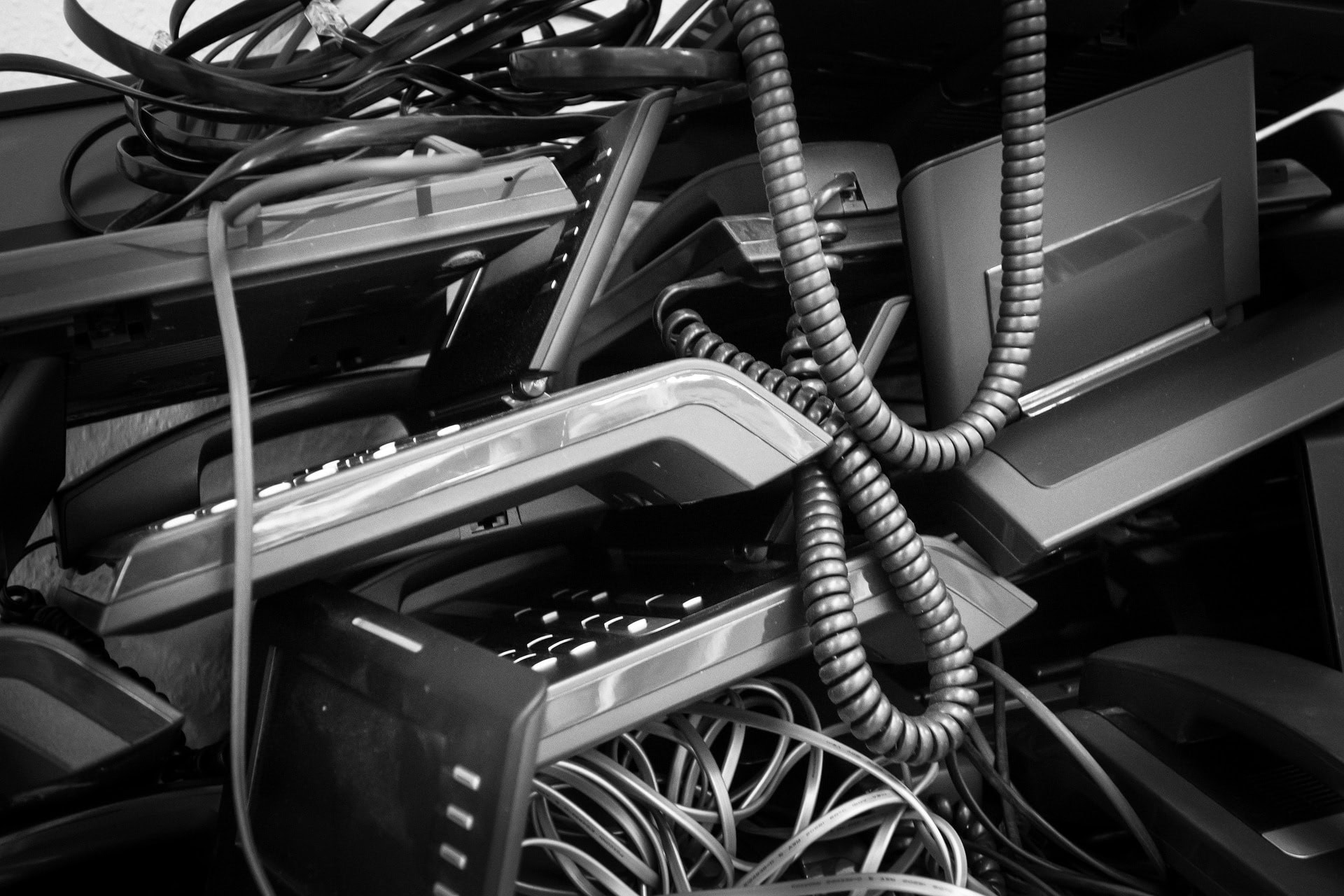
What is e-waste?
In Switzerland, electronic waste (often referred to as e-waste) is defined by the Ordinance on the Return, Take-Back, and Disposal of Electrical and Electronic Equipment (OREA). It refers to any electrical or electronic device that operates on electrical power and is used in households or for professional or commercial purposes, as well as their components.
As soon as an object has a plug, a cord, or a battery, it is an electronic or electrical device.
People often think only of large appliances, but e-waste also includes a wide variety of small everyday items:
- Consumer electronics (headphones, speakers, clock radios, string lights, etc.)
- Computer equipment (smartphones, internet routers, computer keyboards and mice, USB flash drives, webcams, USB or HDMI cables, calculators, etc.)
- Household appliances (refrigerator, washing machine, dishwasher, oven, kettle, toaster, hair dryer, iron, electric toothbrush, etc.)
- Lighting fixtures (bedside lamps, solar lamps, etc.)
- Power tools (drill, glue gun, etc.)
- Electric toys and sports equipment (remote-controlled cars, drones, educational consoles, etc.)
Why do we generate so much e-waste?
The number of electronic devices is constantly increasing, while at the same time their lifespan is decreasing. This is why there is so much electronic waste. The most striking example is that of smartphones: on average, they are used for only 2 to 3 years in Switzerland (RTS, 2024), even though their lifespan can be much longer.
There are several reasons for this phenomenon:
- Equipment not designed for a long service life: choice of materials, inability to disassemble (glued or welded parts)
- Technological obsolescence: updates are no longer available, performance declines, and the device becomes harder to use
- Marketing incentives: The constant release of new models encourages us to replace our devices earlier than planned (FRC, 2024)
As a result, many devices are replaced even though they still work. They end up either in a closet or in the recycling bin.
The problem of e-waste:
Electronic devices are a major source of waste. In 2022, 0.7 kg of electrical and electronic waste per person (FOEN, 2025) ended up in the trash in Switzerland. Nearly half of these devices could have been collected separately and recycled.
In 2024, recycling companies in Switzerland collected 34,600 tons of electronic devices (FSO, 2024). In addition, a large number of electronic devices lie unused in our drawers. For example, nearly 3 million Swiss people keep their old, unused smartphones at home. Only one in five people resells or donates their old device. As a result, large quantities of rare materials remain unused (FSO, 2024).
The main environmental impact does not occur when a device is disposed of, but during its manufacture (ADEME, 2018). Disposing of a device prematurely therefore means wasting all the resources required to produce it.
The production of electronic devices requires the extraction of numerous resources, such as minerals and metals. A significant amount of water and energy is required, which often leads to the destruction of many ecosystems (Reporterre, 2019). Extraction also has a significant impact on local populations, through child labor, increased instability and conflict, and rising health issues.
Specifically, manufacturing a computer requires the extraction of approximately 800 kg of minerals, the emission of 240 kg of greenhouse gases, and the use of more than 20 kg of chemicals (Cantonal Energy and Environment Services, 2025).
Recycling
Switzerland has an extensive e-waste recycling network. Items can be dropped off free of charge at recycling centers, as well as at many retail stores. Under the Ordinance on the Return, Take-Back, and Disposal of Electrical and Electronic Equipment, manufacturers and retailers of electronic devices are required to accept returns of devices similar to those in their product lines. An advance recycling fee is included in the retail price of electronic devices sold in Switzerland (SENS, 2025), thereby helping to finance their recycling.
Proper recycling of electronic waste is essential. This is because electronic waste consists largely of metals (including precious metals and rare technological metals), plastics, and glass. About 75% of the materials in electronic waste are recyclable (SENS, 2025). Reusing metals is essential due to their limited availability and the high environmental impact of their extraction. In fact, recycling one ton of electrical or electronic devices (including lighting fixtures) saves the equivalent of the environmental impact of 247,500 km traveled by train on the SBB, or 48 times the entire Swiss rail network (Swiss Recycle, 2026).
Proper disposal of electronic waste is also essential to prevent heavy metals such as lead, cadmium, and mercury from entering the environment.
Reducing e-waste
The best way to reduce the environmental impact of electronic waste is simple: extend its lifespan.
Here are some effective steps you can take throughout the product lifecycle:
- Avoid unnecessary purchases: Buy only what you really need. Don’t buy gadgets or devices to replace something that still works.
- Choose refurbished products: Opt for used or refurbished devices to reduce resource consumption and the production of new devices. The fact that a product is refurbished is indicated on resale websites.
- Choose appliances that are easy to repair.
- In France, since 2021, certain electronic devices, such as laptops and dishwashers, are required to include a repairability rating—a score indicating how easy the item is to repair (Ministry of the Economy, 2025).
- Maintain and repair your appliances: Regular maintenance of your appliances helps extend their lifespan. If an appliance breaks down, opt for repair rather than replacement.
- There are many organizations and Repair Cafés that help us repair our electronic devices at a lower cost.
- Donate or sell: If your device still works but you no longer use it, donate it to a charity or sell it.
- Recycle: If your device no longer works, don’t let it sit unused in your drawers. Take it to a recycling center or a store so it can be properly recycled and its components reused.
Resources:
You would like to:
- Donate or sell working electronics that you no longer use ?
- You’ll find plenty of flea markets and thrift stores on our map of recommended spots: Map of recommended spots • ZeroWaste Switzerland
- Also consider websites and apps like Geev, where you can give away or pick up items for free from other individuals,
- Your recycling center may have a reuse shop that accepts electronic devices (subject to cantonal regulations).
- Donate obsolete cell phones?
- The NoOPS organization collects used phones to repair them and resell them, or to disassemble them and recover the materials. You can order a free, pre-stamped envelope online to send your phones, or drop them off at one of the collection points
- Recycle your e-cigarettes?
- In addition to dropping them off at a recycling center or a retail location, you can also order a free Vape Recycling Bag, which will be picked up from your home by the postal service.
- Recycle your electronic waste?
- The Recycling Map lists all collection points for all types of waste, including electronic waste. Recycling Map – All Collection Points in Switzerland – Recycling Map.
- Drop it off at a recycling center or in-store (free drop-off)
- Repair your electronics at a lower cost?
- Check with your local municipality; some cities, such as Zurich, Prilly, Vevey, and Renens, offer financial assistance for repairs by covering part of the repair costs for certain electronic devices (Tribune de Genève, 2026).
And if you’re wondering how the situation has changed over the past 20 years, you’ll find the answer in the 2006 episode of “A bon entendeur”: *What to Do with Our Used Cell Phones* | RTS
References
ADEME (2018). Modeling and Assessment of the Environmental Impacts of Consumer Products and Capital Goods. https://librairie.ademe.fr/index.php?controller=attachment&id;_attachment=6869&preview;=1
Federation of Consumers in French-speaking Switzerland (FRC). (2024). Product Lifespan. https://www.frc.ch/dossiers/duree-de-vie-des-objets
Ministry of Economy and Finance. (2025). Everything You Need to Know About the Repairability Index. https://www.economie.gouv.fr/particuliers/mes-droits-conso/bien-consommer/tout-savoir-sur-lindice-de-reparabilite
Federal Office for the Environment (FOEN). (2021). Ordinance of October 20, 2021, on the Return, Take-Back, and Disposal of Electrical and Electronic Equipment (OREA) (SR 814.620). Fedlex. https://www.fedlex.admin.ch/eli/cc/2021/633/fr
Federal Office for the Environment (FOEN). (2025). Waste Statistics. https://www.bafu.admin.ch/fr/statistiques-dechets
Federal Statistical Office (FSO). (2024). Collection of electronic waste. Collection of electronic waste | Federal Statistical Office – FSO
Reporterre. (2019). Smartphone madness: a poison for the planet. https://reporterre.net/La-folie-du-smartphone-un-poison-pour-la-planete
RTS. (2024). The short lifespan of electronic devices harms the environment. https://www.rts.ch/info/environnement/2024/article/la-courte-vie-des-appareils-electroniques-nuit-a-l-environnement-28501027.html
Cantonal Energy and Environment Offices (2025). The manufacturing of digital devices has a greater environmental impact than their use. https://www.energie-environnement.ch/electronique-electromenager/limpact-energetique-du-numerique
SENS eRecycling. (2025). Collecting and recycling electrical appliances. https://www.erecycling.ch/fr/privatpersonen/eRecycling/elektrogeraete-recyclen.html
SWICO Recycling. (2026). Recycling. https://www.swico.ch/fr/recyclage/
Swiss Recycle. (2026). Electrical and electronic equipment. https://swissrecycle.ch/fr/substances-valorisables-savoir/substances-valorisables/appareils-electriques-et-electroniques
Tribune de Genève. (2026). Zurich: A bonus to encourage repairs starting in 2026. https://www.tdg.ch/zurich-un-bonus-pour-encourager-la-reparation-des-2026-387736314729
Learn more
RTS. (2025). Zero Waste Counter 3. Electrical and Electronic Waste. https://www.rts.ch/articles/2025/article/reduire-ses-dechets-conseils-d-experts-pour-un-quotidien-plus-ecologique-28916159.html#timeline-anchor-1750177356644